Gutters
Gutters are boring — until water finds your foundation. Handle it once.
What new gutters really cost, which materials and guards are worth it, and what install day looks like — so the quotes you compare actually add up.
- ✓ 100% free quotes
- ✓ Licensed local roofers
- ✓ No obligation

The short version
$6–$12
per linear foot installed is the national ballpark for seamless aluminum — the most common gutter on American homes.
150–200 feet
of gutter on a typical single-family home — which is why full replacements often land between roughly $1,000 and $2,500 nationally.
1 day
is all most gutter replacements take. Seamless runs are formed on-site to your exact roofline lengths.
Three kinds of gutter jobs — and which one is yours.
Nearly every gutter project is a repair, a full replacement, or a guard installation. Naming yours tells you the realistic cost, the timeline, and what to ask the pros who quote it.
Repairs and resealing
A dripping corner seam, a sagging run pulling off the fascia, a downspout that parted ways with the wall. Repairs are cheap and fast — the judgment call is whether you're patching a system with years left or bailing out one at the end of its life. A pro can re-pitch and reseal in a visit, and will tell you which situation you're in.
Full replacement
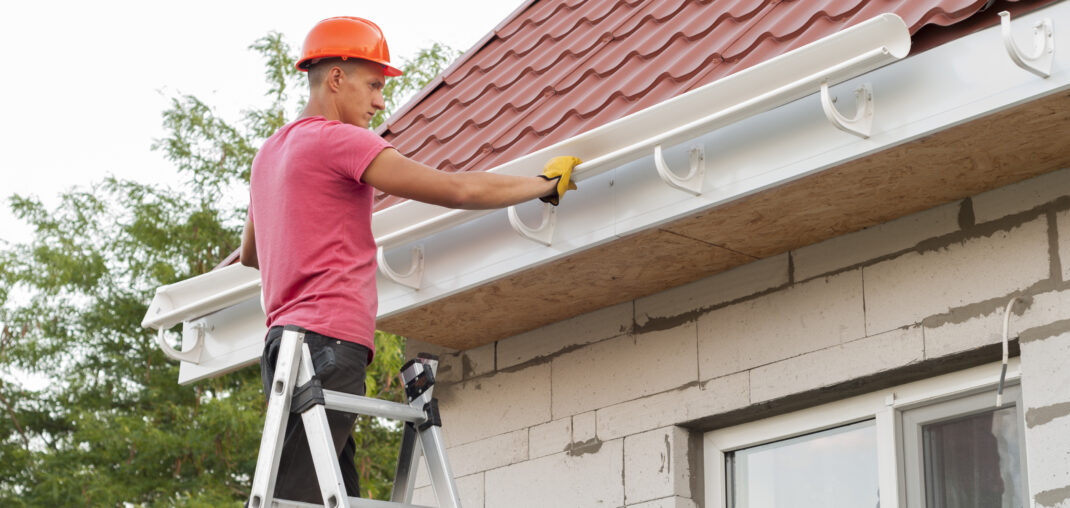
Old gutters down, new seamless runs formed on-site from a coil, hung with hidden hangers, pitched to new downspouts. Seamless is the standard for a reason — fewer joints means fewer future leaks. It's also the moment to fix what the old gutters hid: rotted fascia gets replaced before the new system goes up.
Gutter guards
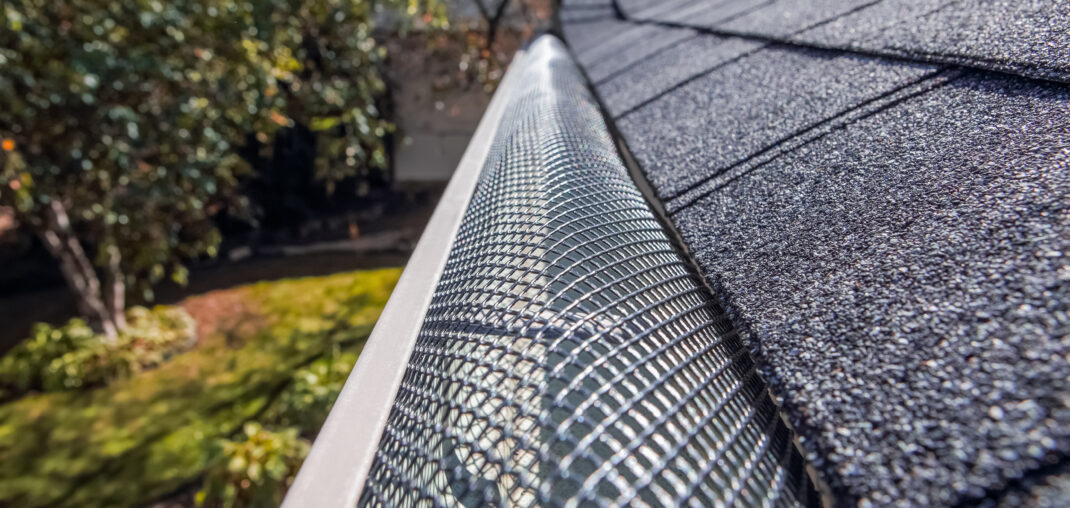
Micro-mesh, screens, and surface-tension covers that keep leaves out and water flowing — typically running $7 to $20 per linear foot installed nationally. Quality varies enormously across that range, and no guard is truly zero-maintenance. Under the right trees, good guards end the twice-a-year ladder ritual for years at a stretch.
Cost
What moves the price of new gutters.
Gutter quotes are built by the linear foot — but the per-foot number hides real variables. When a pro prices your home, this is what they're weighing:
-
Linear footage and stories. More roofline costs more, and second-story work adds ladder time and safety setup — typically a few dollars more per foot than ground-level runs.
-
Material. Seamless aluminum is the American standard. Steel takes abuse better in harsh climates; copper is the premium choice that outlives the mortgage.
-
Gutter size and capacity. Five-inch gutters handle most roofs. Big, steep roof planes and downpour-prone regions call for six-inch gutters and oversized downspouts.
-
Guards and screens. Adding protection while the crew is already up there is the cheap way to buy it. Guard type moves the price more than any other single choice.
-
Fascia and soffit condition. Gutters mount to the fascia — and old leaks often rot it quietly. Good quotes state the price per board to replace what the tear-down reveals.
-
Roofline complexity. Every corner needs a mitered joint and every valley concentrates water. Simple ranch rooflines price lower per foot than cut-up two-story ones.
| Material | Typical lifespan | Relative cost |
|---|---|---|
| Vinyl (sectional) | 10–20 years | $ |
| Aluminum (seamless) | 20–30 years | $$ |
| Galvanized / galvalume steel | 20–30 years | $$$ |
| Copper | 50+ years | $$$$ |
Lifespans assume proper pitch, solid hangers, and basic upkeep. Your quotes will price your exact roofline — these are national ballparks, not promises.
What to expect
How a gutter replacement actually goes.
From the walk-around to the hose test, a well-run gutter job follows the same four beats — usually inside a single day. Here's the rhythm:
-
1
Walk-around and quotes
Each pro measures the roofline, counts downspouts and corners, and checks the fascia. Comparing quotes side by side shows who's including guards, fascia work, and haul-away.
-
2
Material, size, and color
You pick the material, gutter size, and a color that matches your trim — aluminum comes in dozens. A written scope locks the footage and the downspout plan.
-
3
Tear-down and install
Old gutters come down, fascia gets inspected, seamless runs are formed on-site and hung with the right pitch toward new downspouts. Most homes wrap in a day.
-
4
Water test and walkthrough
A good crew runs water to prove pitch and flow, checks every drip edge and corner, and hauls away the old system. Warranties on material and workmanship go in writing.
Three Gutters quotes by dinner.
Tell us about your roof — about 30 seconds — and licensed local roofers come to you with real prices.
Get My Free Gutters Quotes100% free quotes · No obligation · No spam calls, ever
Local guides
Roofing in your state.
Costs, permits, materials, and timing all change with your climate and your state's rules. Pick yours for guides written for exactly where you live.
 Alabama
  Alaska
  Arizona
  Arkansas
  California
  Colorado
  Connecticut
  Delaware
  Florida
  Georgia
  Hawaii
  Idaho
Idaho  Illinois
  Indiana
  Iowa
Iowa  Kansas
  Kentucky
  Louisiana
  Maine
Maine  Maryland
  Massachusetts
  Michigan
  Minnesota
  Mississippi
  Missouri
  Montana
  Nebraska
  Nevada
  New Hampshire
  New Jersey
  New Mexico
  New York
  North Carolina
  North Dakota
  Ohio
Ohio  Pennsylvania
  Tennessee
  Texas
Texas  Virginia
  Washington
 Roofing FAQ
What homeowners ask about roofs.
Still weighing repair against replacement? Get free quotes for both and let the numbers decide. Start here.
Should I repair my roof or replace it? +
Age decides most of it. If the roof is under 15 years old and the damage is local — a leak, a few shingles — repair usually wins. Past 20 years, or with widespread curling, granule loss, or repeat leaks, replacement is almost always the better spend. A licensed roofer can tell you in one inspection; getting two or three opinions keeps everyone honest.
How long does a roof replacement take? +
Most single-family homes take one to three days on the roof: tear-off and dry-in the first day, shingles and detail work after. Large, steep, or complex roofs — and weather delays — can stretch it to a week. Your contract should state the expected duration.
Will insurance pay for my roof? +
If the damage came from a covered event — hail, wind, a fallen tree — homeowner's insurance often covers repair or replacement, minus your deductible. Normal wear and age are not covered. Document damage with photos and dates, get a roofer's inspection report, and file promptly; storm-experienced local pros know exactly what adjusters want to see.
What time of year is best for roofing? +
Roofers work year-round in most of the country. Late spring through fall is peak season — easier scheduling in winter can mean better pricing, while asphalt shingles seal best above roughly 40°F. If the roof is leaking, the best time is now; water damage compounds fast.
Do I need to be home during the work? +
No — the work happens outside. Be reachable by phone for decisions (like hidden decking damage), move vehicles out of the driveway, and plan around the noise if you work from home. Pets are usually happier elsewhere for a day or two.
How do I get roofing quotes here? +
Answer a few questions about your roof — about 30 seconds. We match you with licensed local roofing contractors, and their quotes are free quotes — no fee, no strings. You compare real prices side by side and hire when you're ready — or don't. There's no obligation, ever.
Ready to see real numbers?
Compare free quotes from licensed local roofers — matched to your exact roof in about 30 seconds.
Get My Free Gutters Quotes